About
What goes on the roof, described by what it does
Panels, inverters and the frame that holds them, in plain words, and why a roof gets one kind rather than another.
AI-generated illustration. Not a real home or business.
The panels
Black-framed monocrystalline panels and either microinverters or a string inverter with optimizers, chosen at the survey for the roof. No maker is named on this site; the contract names the make and model of each.
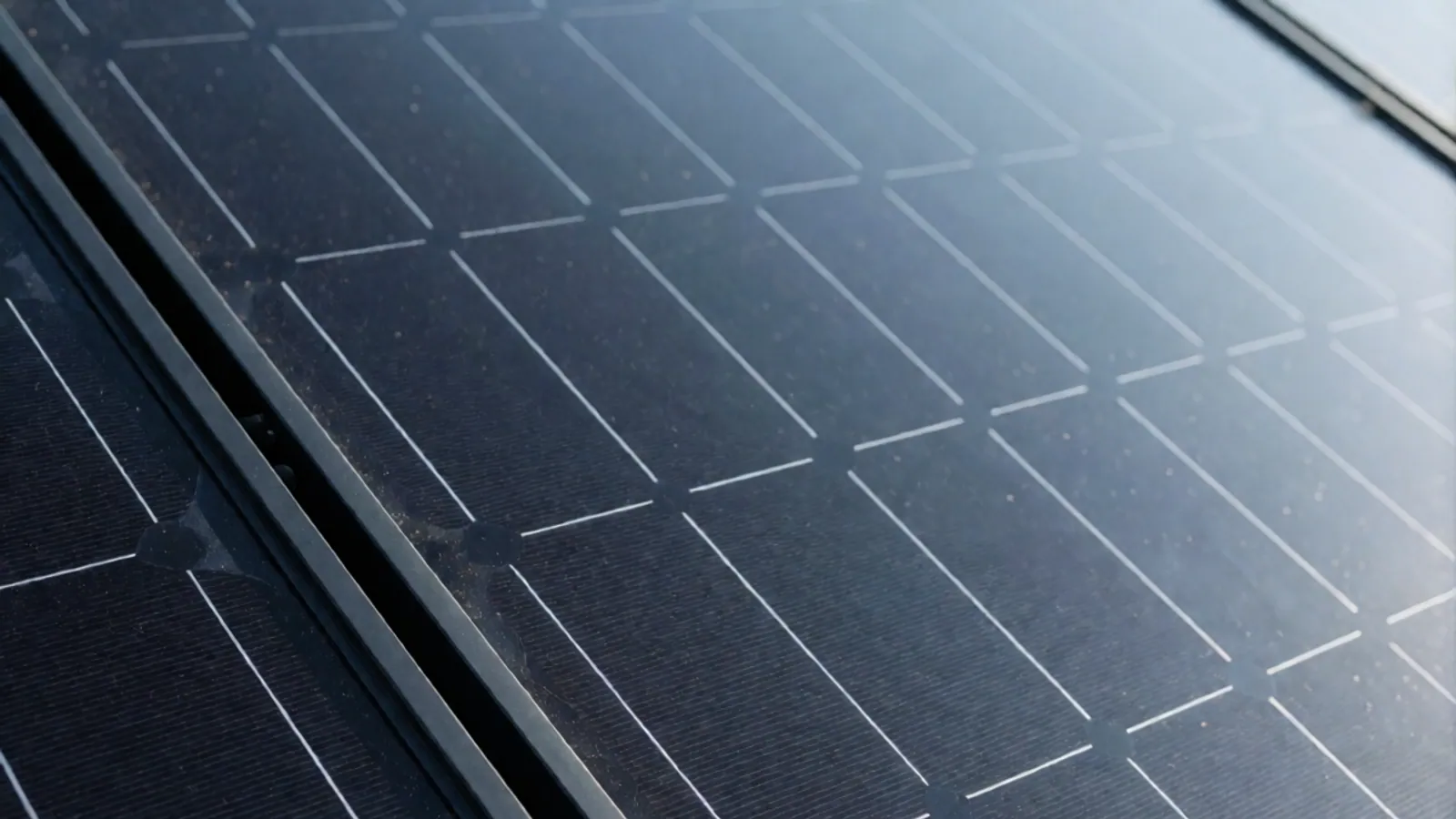
Each panel is 440 watts and about twenty-one square feet. Monocrystalline cells are cut from a single crystal of silicon, which is why they look an even dark color rather than speckled blue. With a black frame and a black backing sheet, a row of them reads from the street as one dark surface, which matters most on a sloped roof that can be seen from the sidewalk and on any house a landmarks review looks at.
A panel's rating is what it makes under a standard test light. A roof in Queens never sees that light for long, which is one reason a size in watts is not the same thing as what a system will make in a year.
The inverters
Panels make direct current; the house runs on alternating current.
Microinverters
A small inverter under each panel turns that panel's direct current into alternating current on the roof. Shade on one panel costs that panel and no other, and a panel that stops is a panel the monitoring can name.
A string inverter with optimizers
One inverter on the wall, near the meter, with an optimizer under each panel that does the per-panel work on the roof. The inverter is a box you can reach without going up a ladder.
Which of the two suits a roof is decided at the survey, from the roof's shape and its shade. Either way, the wiring runs under the panels, then in conduit down the back of the house to the meter and the panel in the basement, with a shut-off and the warning labels the code requires.
Rails, frames and canopies
How the panels are held, and what each way of holding them costs per watt.
Rails on a sloped roof
On a shingle roof each attachment is fixed into a rafter and sealed under a metal flashing. The rails run across the attachments and the panels clamp to the rails, close to the shingles and parallel to them.
Low tilted frames on a flat roof
The frames stand on pads laid on the roof, tilted a little toward the sun so rain runs off the glass. Each row stands apart from the next, because a tilted row casts a shadow behind it.
A raised canopy over a flat roof
A raised canopy carries the panels on posts high enough to walk under, so the clear walkway stays clear beneath it and more of the roof can carry panels. It costs more per watt, and it needs its own structural drawings.
| The roof | The mount | The rate per watt |
|---|---|---|
| A flat roof | Low tilted frames on the roof itself | $5.20 |
| A flat roof | A raised canopy over the roof, high enough to walk under | $6.40 |
| A sloped roof | Rails fixed to the roof | $4.60 |
Monitoring
Each system is set up with the inverter maker's monitoring, which shows you what the panels are doing on your own phone or computer. You can give the office the same view, and the contract says what the office does when a panel or an inverter stops reporting.
Whose promise covers what
We promise what is in writing: the system, its layout, the price, the dates and what the contract says it will make. We don't offer a warranty of our own, a lifetime anything or a guarantee of satisfaction. The panels and the inverters carry their makers' warranties.
A real contract should name three separate promises in writing: the panel and inverter makers' warranties, written by the makers; the installer's own workmanship warranty; and what happens if the roof leaks where it was drilled. New York also requires a production guarantee in every purchase contract. In New York City a contractor who advertises a guarantee must put its terms in the ad and in the contract, and may not offer a lifetime one.
Since the contract names each make and model, the makers' own terms can be read before you sign, not after.
What is not on the list
We don't install batteries. A home battery in New York City needs its own Buildings filing, a product the Fire Department has approved, and a holder of the Fire Department's own certificate to look after it, and very few products have that approval yet.
A system tied to the grid shuts itself off when the grid goes down, so that nobody repairing the lines is hurt. Without a battery, panels do not keep the lights on in an outage, and this company does not install batteries.
Size your roof
Try the roof sizing planner: panels, kilowatts and the roof they take at the published rate, in about three minutes. Sending it to us books nothing.