Every job starts with a site survey.
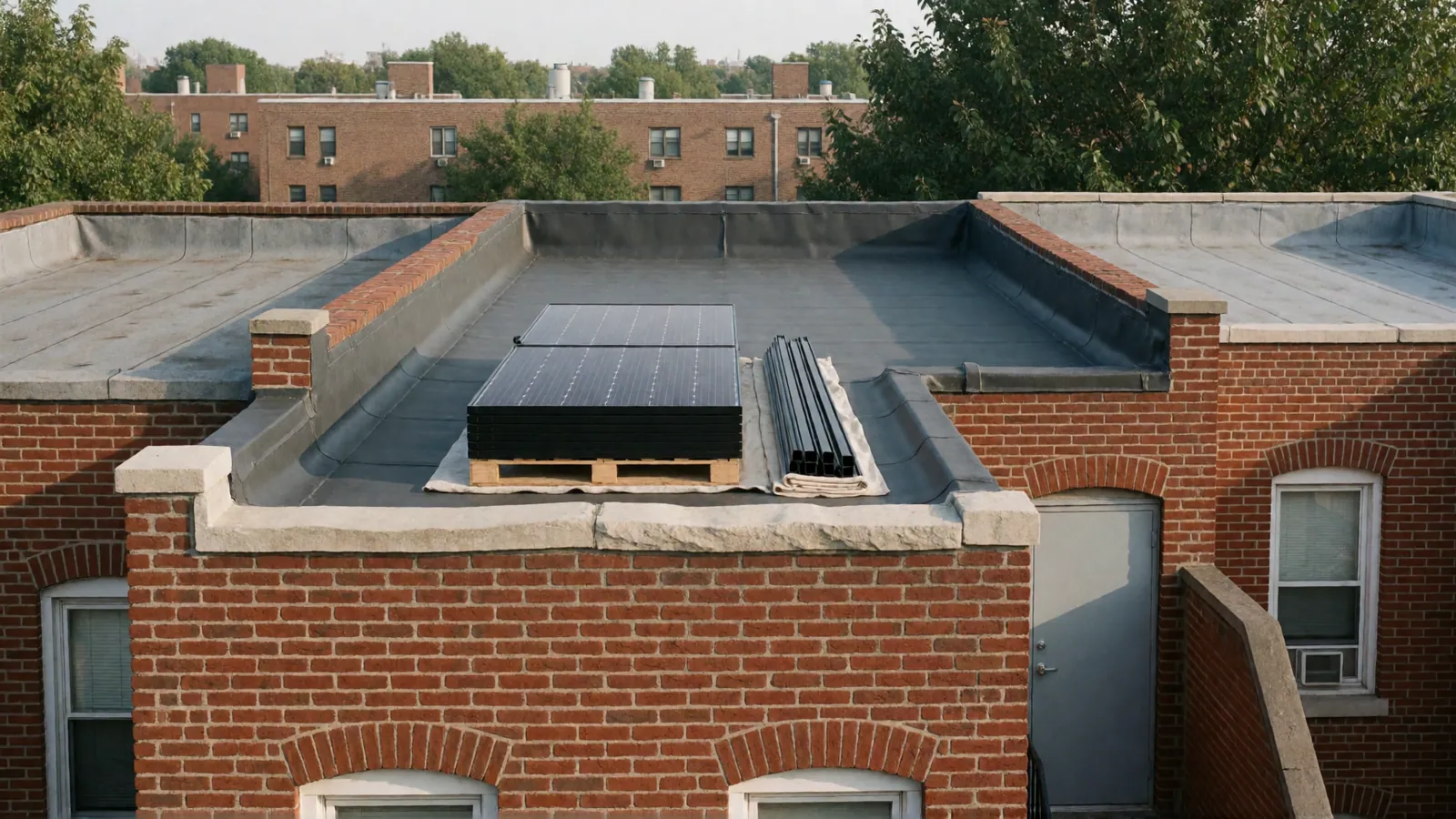
A stack of black solar panels lying face up on a wooden pallet and a bundle of black rails on a canvas cloth, on a newly covered gray flat roof behind a brick parapet.

After the install

Panels off for the roofer, and back on after

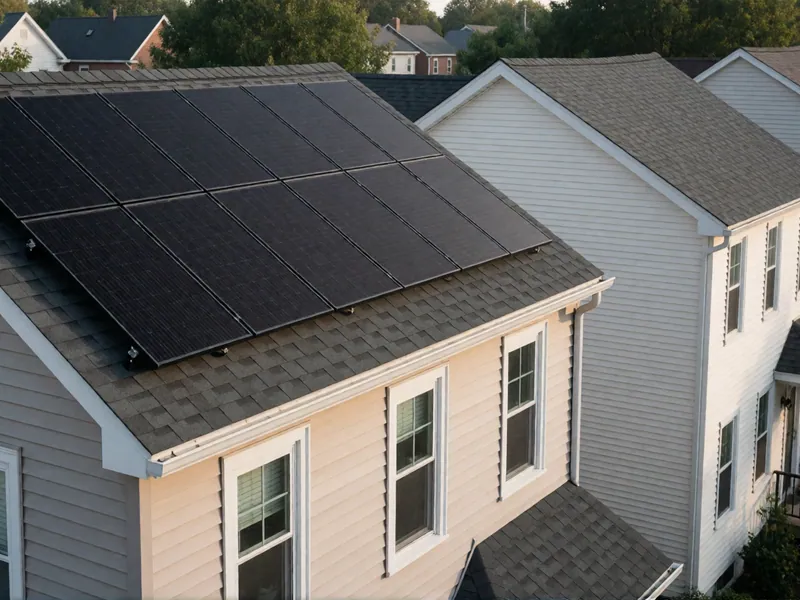
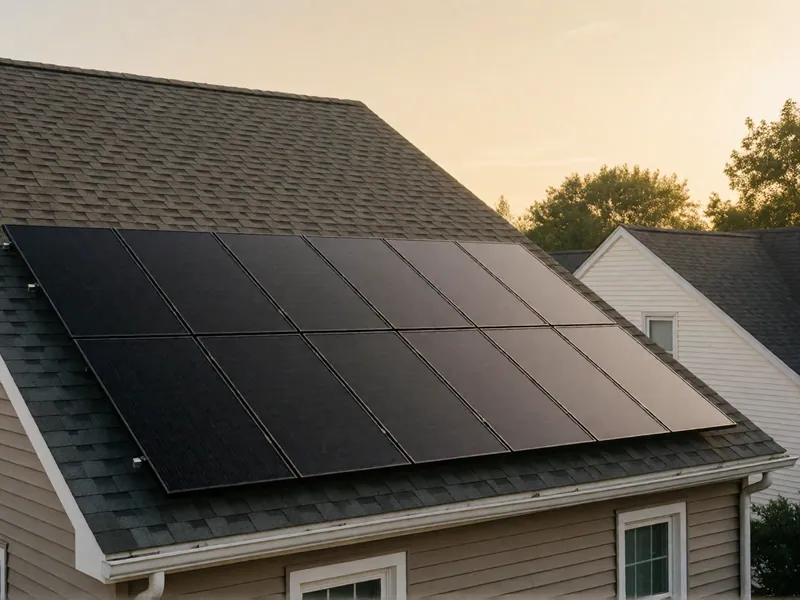
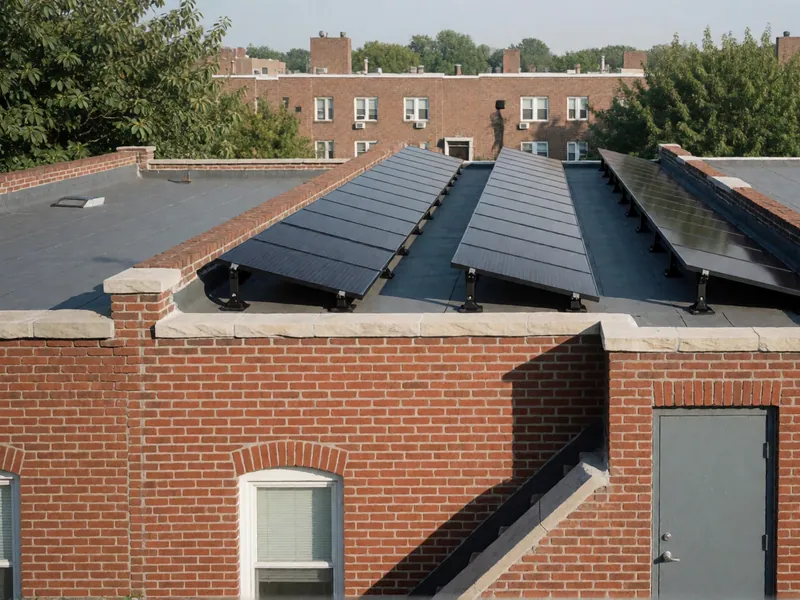
The panels taken down and stored, your roofer's new roof, and the panels put back, rewired and inspected. Priced per panel, seen first.

  • $300 a panel, seen first
  • Queens only

AI-generated illustration. Not a real home or business.

Why it comes to this

Panels stay up for decades, so a roof covering near the end of its life is replaced before they go on, not after. Taking panels off and putting them back later costs money, and in New York City replacing a whole roof deck brings its own requirement for solar or a green roof. We don't do roofing: a roofer goes first, and the survey says whether one is needed.

When a new roof comes later anyway, because a roof wore faster than it looked or a leak turned up somewhere else on it, the panels have to come off before the roofer can start, and go back when the roofer is done.

Not every roof repair needs the panels off. A patch away from the array can be made around it, and that is the first thing the visit looks at.

  • Priced per panel.
  • The roofing is your roofer's.
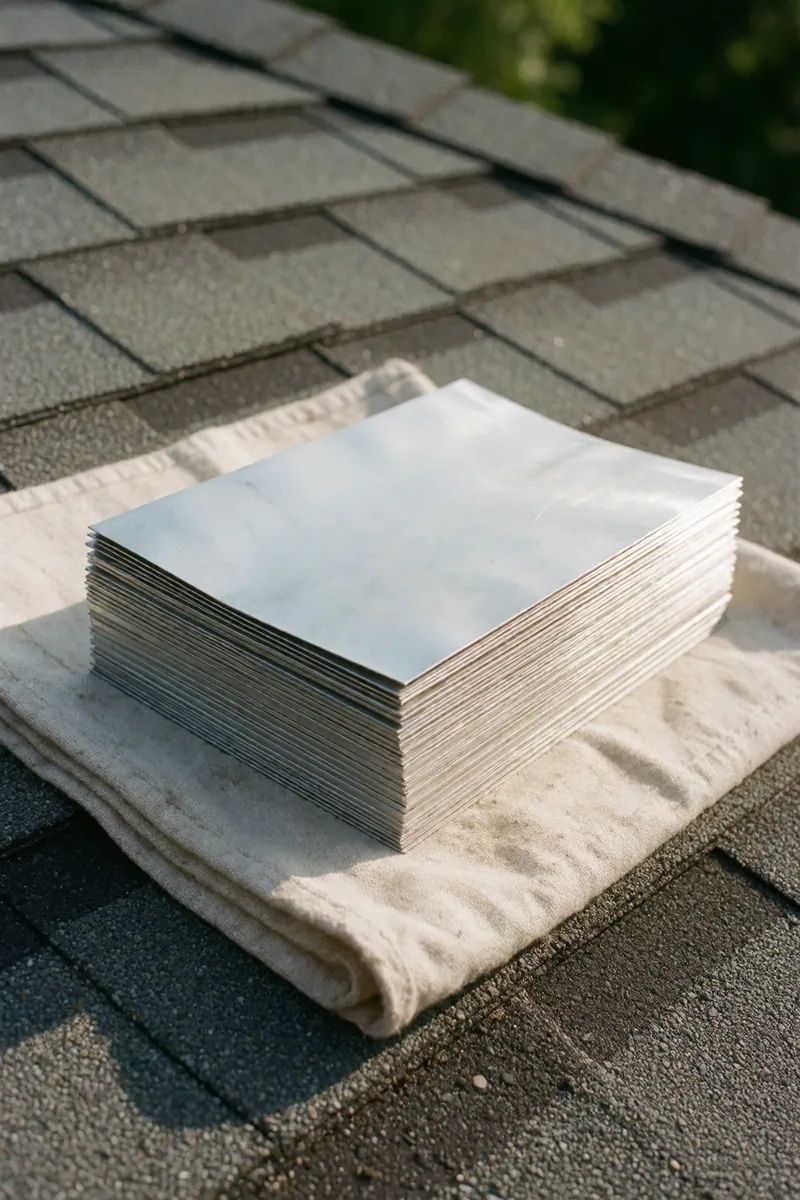
A neat stack of plain aluminum flashing plates on a folded canvas cloth on gray shingles.AI-generated illustration. Not a real home or business.

Saoirse Lindgren-Oyelaran

Roof attachments and flashing

Fixes the attachments to the rafters and seals every one of them.

Saoirse finds the rafter before she drills, every time.

Saoirse seals each attachment under a metal flashing before the rail goes on.

The picture is a still of the tools, not a portrait.
Off, kept, and back on

  1. Switched off

    The system is switched off at its shut-off and disconnected at the panel in the basement before anyone touches a wire on the roof.

  2. Numbered and lifted

    Each panel is numbered against the layout, unclamped and carried down, so that it goes back exactly where it came from.

  3. Kept until the roof is done

    The panels are stored while the roofer works. The rails and the attachments come off a sloped roof; the frames and their pads are lifted off a flat one.

  4. The roofer's roof

    The new roof is your roofer's from start to finish, including the old holes under the attachments, which are closed as part of it.

  5. Back on

    New attachments go into the rafters through the new roof, each under a new flashing, and the rails, the panels and the wiring go back as they were laid out.

  6. Rewired and inspected

    The system is reconnected, the work is inspected, and the system is switched back on.

How it is priced, and who does what

Taking panels off for a new roof and putting them back is $300 a panel, seen first, plus any sales tax New York charges on that work, which the written price shows. The roofing itself is your roofer's.

It is priced by the panel because the work is the panels: each one taken down, kept and put back. It is seen first because no two of these are alike: a system somebody else put up, an attachment that has leaked, a roofer who needs more of the roof cleared than the panels cover.

The roofer and the panels are two contracts, and the roofing one carries its own rules:

If an installer does take money before the job is substantially finished, New York law says it is still yours: it goes into an escrow account at a bank in New York within five business days, and you are told which bank, unless the installer posts a bond instead. If a job includes roofing, a roofing contractor may not ask for a deposit at all.

Related services

Before your roofer starts

Tell the office when the roofer expects to start, who put the panels up and roughly how many there are. The system is looked at before a date is agreed.