$6.40 a watt, no sales tax
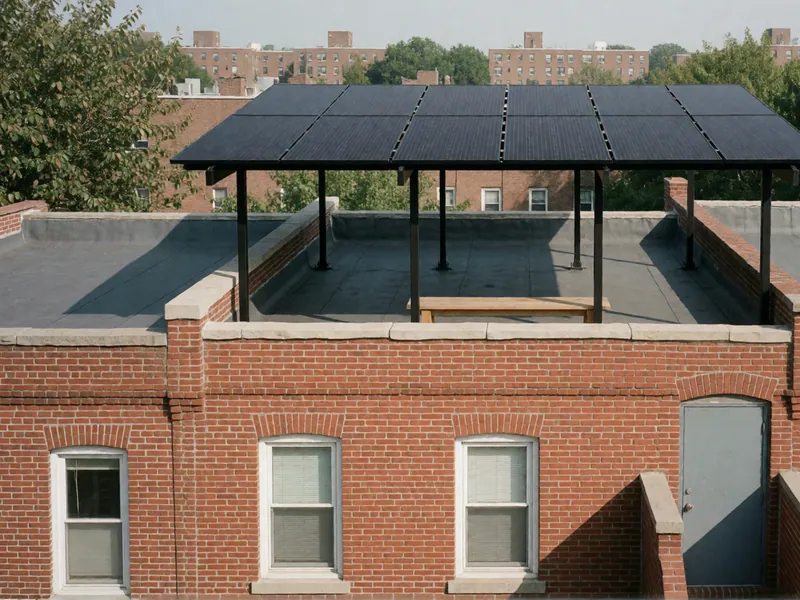
Raised solar canopies
Panels on a raised frame high enough to walk under, so the walkway beneath stays clear and more of a flat roof carries panels.
Every job starts with a site survey.
37-32 61st Street, Woodside, NY 11377
Survey and paperwork
The Buildings filings, the electrical permit, the fire code's paths, a landmarks permit where one applies and the utility's application, in order.
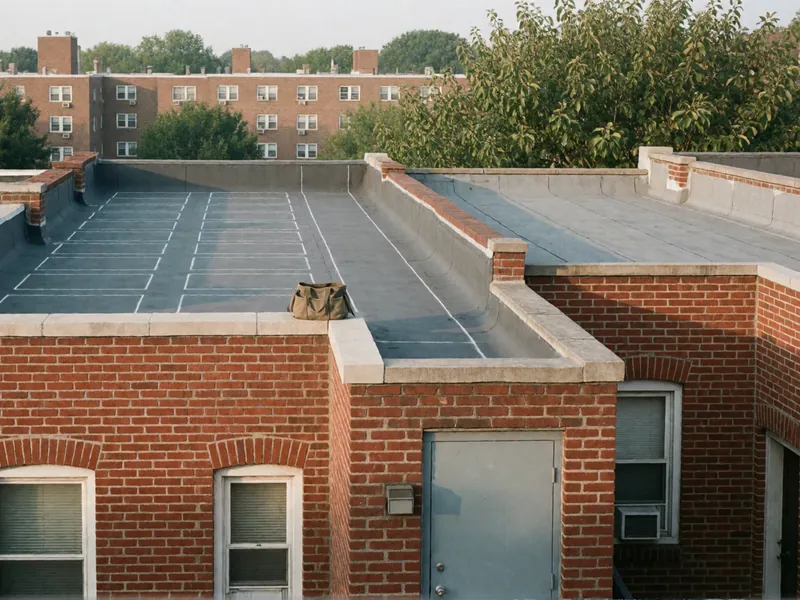
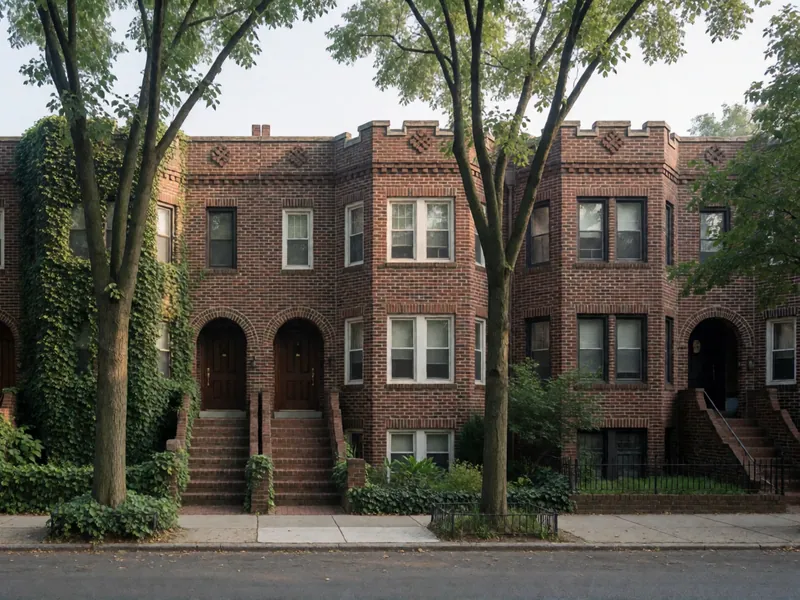
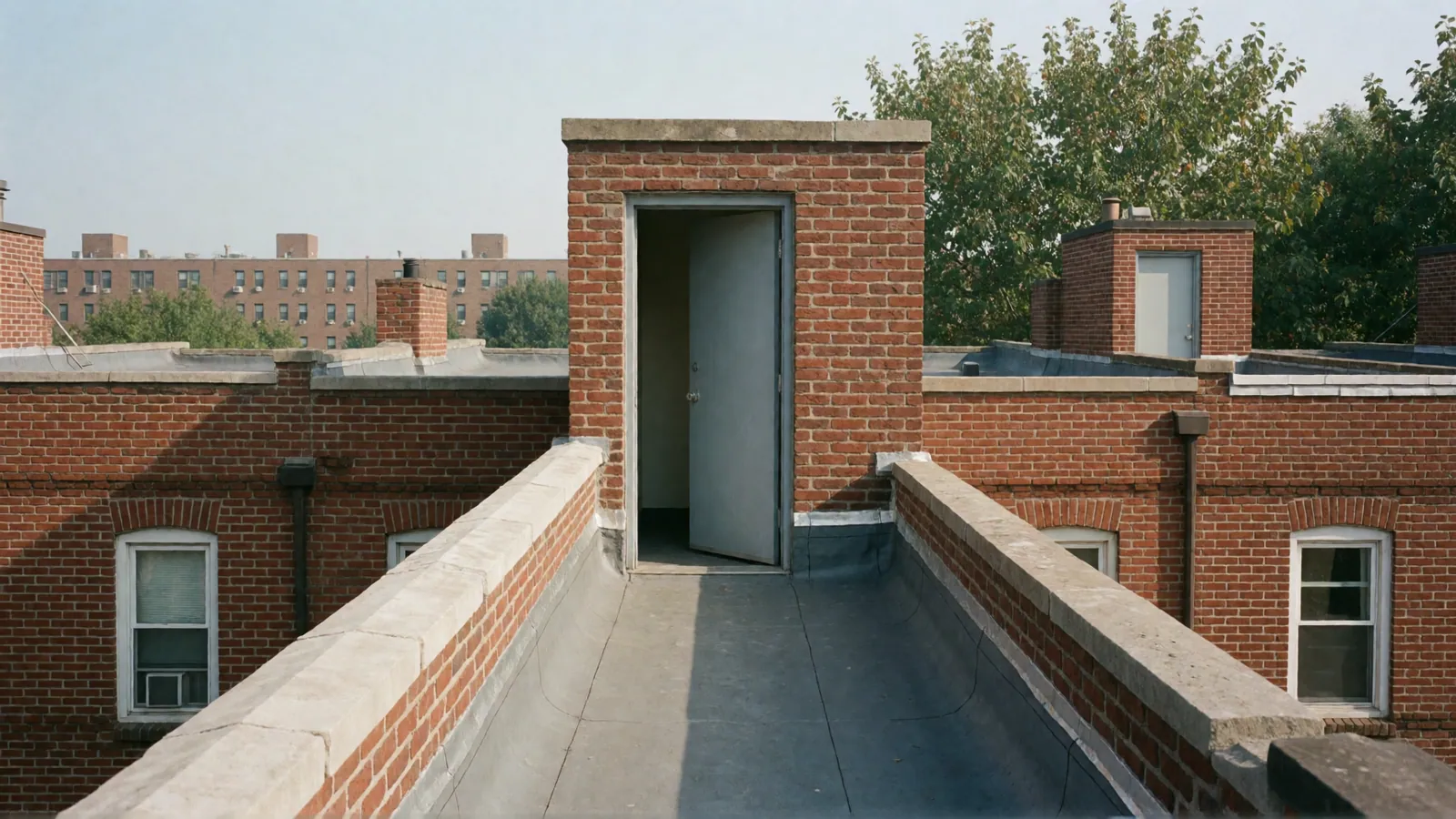
AI-generated illustration. Not a real home or business.
Roughly in the order they happen. Where one waits for another, the step says so.
For a house built before 1987, or one whose age nobody knows, the owner has an asbestos investigation made before the Buildings filing, because old roofing and the materials around it can contain asbestos. It is a step on the way, not a reason to stop.
Solar on a landmark or in a historic district needs a permit from the Landmarks Preservation Commission before the Buildings filing. Panels usually have to be all black and nearly invisible from the street, and the review adds weeks. We don't plan these online; we see them first.
The solar job is filed with the Department of Buildings by a licensed professional engineer or registered architect, who draws the layout with the fire code's paths to scale, works out the structure and the wind, and certifies the work. A homeowner cannot file it.
In New York City every wire of a solar system is run by a licensed master electrician, or under one's direct supervision, and that electrician files the electrical permit, which must be issued before the solar permit is. Only someone who holds the license may call themselves an electrician in an advertisement. This demonstration company names no electrician.
Only a general contractor registered with the Department of Buildings can request the work permit, and an independent inspector checks the work before the electrical inspection.
An independent inspector and the Department of Buildings' electrical inspector check the work, usually in the weeks after.
The utility reviews the job and changes the meter's settings. Only then is the system switched on and the monitoring set up, and only then does the last stage fall due.
A home solar system in New York City passes through several hands that the law names, and the solar job itself cannot be filed by the homeowner. The office puts the paperwork together: the layout, the drawings to be filed, the utility's application and the dates of every inspection, in one folder for the job. The filings themselves are made by the people the law names, and this demonstration names none of them.
Before you hire an installer, ask for its Home Improvement Contractor license number and check it on the Department of Consumer and Worker Protection's license search, and ask who the master electrician on the job is.
The fire code's paths are drawn to scale on the engineer's plans, and the panels are drawn around them. Where a roof cannot keep them in the usual way, a narrow roof under a canopy for instance, the Fire Department's permission comes into it, and a fire department variance adds weeks.
As of October 2026, Con Edison customers who add solar are credited for what they send to the grid under net metering, and pay a monthly charge for the system's size, the Customer Benefit Contribution, that changes every year. The installer applies to the utility in your name, and the system runs only after the utility gives permission to operate.
In parts of the city served by underground network cables, the utility may limit or refuse a connection. The utility answers that after the application, not before.
Nothing is switched on when the crew leaves. The system waits, connected and off, through the inspections and the utility's review. Callum calls you the day the utility's permission arrives, and not before.
From a signed contract to a system the utility lets you switch on usually takes two to four months in New York City: the drawings and the permits, the install itself in a day or two, the inspections, and the utility's own review. A landmark review or a fire department variance adds weeks.
The property-tax abatement is the one piece of this paperwork that is about money, and it is filed with the rest of it.
As of October 2026, New York City offers a property-tax abatement for a solar system placed in service before 2035. The owner applies, inside the Buildings filing, by March 15 before the tax year it starts in.
Incentives exist and change. Each has its own rules and limits, and what one is worth depends on your own taxes. This site does not work any of them out: check with the IRS, the State's Department of Taxation and Finance, the City's Department of Buildings, NYSERDA and your tax adviser before you rely on one.
The price per watt covers the survey, the layout and the drawings, the panels, the inverters, the racking or the canopy, the wiring, the permits and the utility application, the install, the inspections and the monitoring set-up. It does not cover roof work, a new electrical service or a main panel upgrade, which are seen at the survey and priced in writing if they are needed.
$6.40 a watt, no sales tax
Panels on a raised frame high enough to walk under, so the walkway beneath stays clear and more of a flat roof carries panels.
Inside the price per watt
An hour on the roof and in the basement, then a layout that draws the clear paths first and the panels second.
Seen first
Sunnyside Gardens, Jackson Heights, Hunters Point, Ridgewood: the commission's permit first, all-black panels kept out of sight from the street. Seen first.
Try the roof sizing planner: panels, kilowatts and the roof they take at the published rate, in about three minutes. Sending it to us books nothing.