
Every job starts with a site survey.
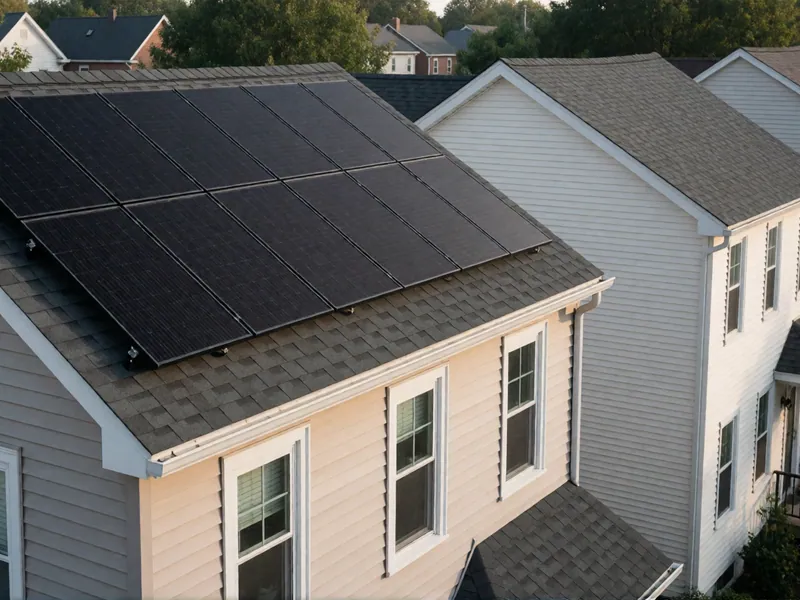
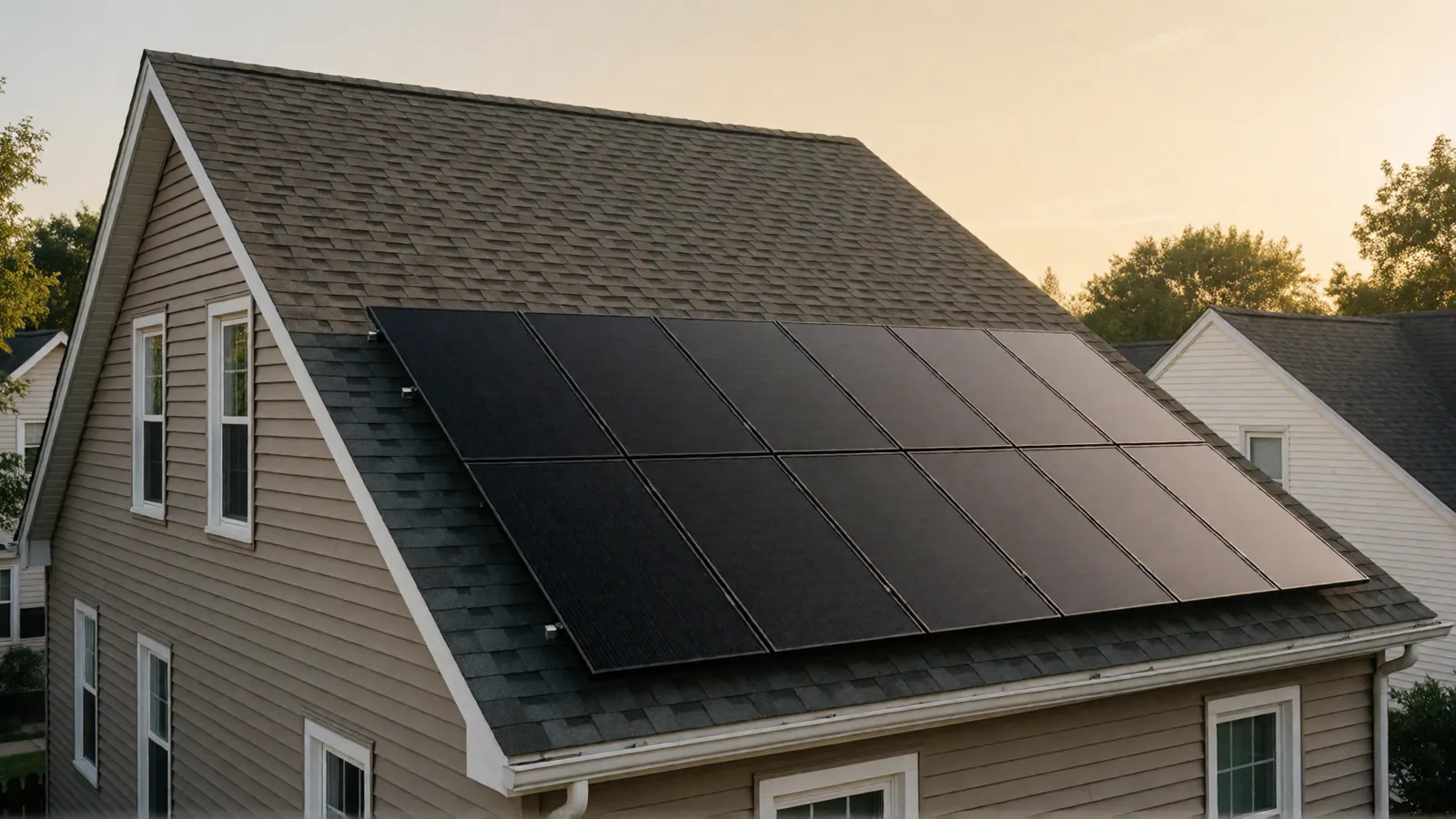
A detached frame house with beige siding in late-afternoon light, two rows of black solar panels on the lower part of its dark shingle roof and a wide band of bare shingles above them, neighboring houses and trees.

After the install

A system you can watch, panel by panel

Monitoring set up on the day the utility says yes, the office's part in it written into the contract, and systems another company put up seen first.

  • Seen first
  • Queens only

AI-generated illustration. Not a real home or business.

What the monitoring shows

Each system is set up with the inverter maker's monitoring, which shows you what the panels are doing on your own phone or computer. You can give the office the same view, and the contract says what the office does when a panel or an inverter stops reporting.

It goes live with the system, on the day the utility says yes and the system is switched on; until then there is nothing to watch.

With microinverters there is one under each panel, so the monitoring sees every panel on its own; with a string inverter and optimizers it sees each panel through its optimizer. Either way you see the shape of the day: little in the early morning, the most around the middle of the day, less toward evening, and a flatter line under a gray sky.

What to look for is not a number but a change: one panel lower than its neighbors on a clear day, a block of panels that comes up later than the rest, a day with nothing at all.

  • Snow left to slide off.
  • Other companies' systems seen first.
A neat stack of closed folders of plain gray card on a pale wooden desk against a white wall, a potted plant beside them.AI-generated illustration. Not a real home or business.

Callum Okonkwo-Breen

Office coordinator

Books the surveys and keeps the paperwork moving.

Callum keeps every permit, the utility application and the inspection dates for a job in one folder.

Callum calls you the day the utility's permission arrives, and not before.

The picture is a still of the tools, not a portrait.
When a panel stops reporting

A panel that stops reporting has not always stopped. Often it is the house's internet connection, a router that was replaced, or a breaker in the basement; sometimes it is the microinverter under the panel. Which of those it is, is the first thing the call is about.

A day with nothing at all, across every panel, may be the grid itself:

A system tied to the grid shuts itself off when the grid goes down, so that nobody repairing the lines is hurt. Without a battery, panels do not keep the lights on in an outage, and this company does not install batteries.

Snow, dust and the roof

Panels are not washed on a schedule: rain does most of it in New York, and snow is left to slide off. Nobody should go up on a roof to clear them.

Snow on a tilted panel slides off in its own time as the sun warms the glass. A shovel or a scraper on the glass scratches it, and a roof under snow is no place to stand.

Systems another company put up

Panels already on your roof, a problem with them, or panels off and back on for a new roof, are seen first: we look at the system before we say what it needs.

That includes panels we did not put up: a system whose installer has gone, monitoring that went quiet when the internet provider changed, a damp patch under an attachment. The planner sends this kind of job to the office instead of sizing it.

Have whatever came with the system to hand if you can: the contract, the layout, the Buildings Department's sign-off, the utility's permission to operate, and the make and model of the panels and the inverters. A panel or an inverter that has failed is a matter for its maker's terms first, and a contract should say what each promise covers:

A real contract should name three separate promises in writing: the panel and inverter makers' warranties, written by the makers; the installer's own workmanship warranty; and what happens if the roof leaks where it was drilled. New York also requires a production guarantee in every purchase contract. In New York City a contractor who advertises a guarantee must put its terms in the ad and in the contract, and may not offer a lifetime one.

Related services

Ask for a look at a system

Tell the office what the system is doing, or has stopped doing, and who put it up, and have any paperwork that came with it to hand.