Every job starts with a site survey.
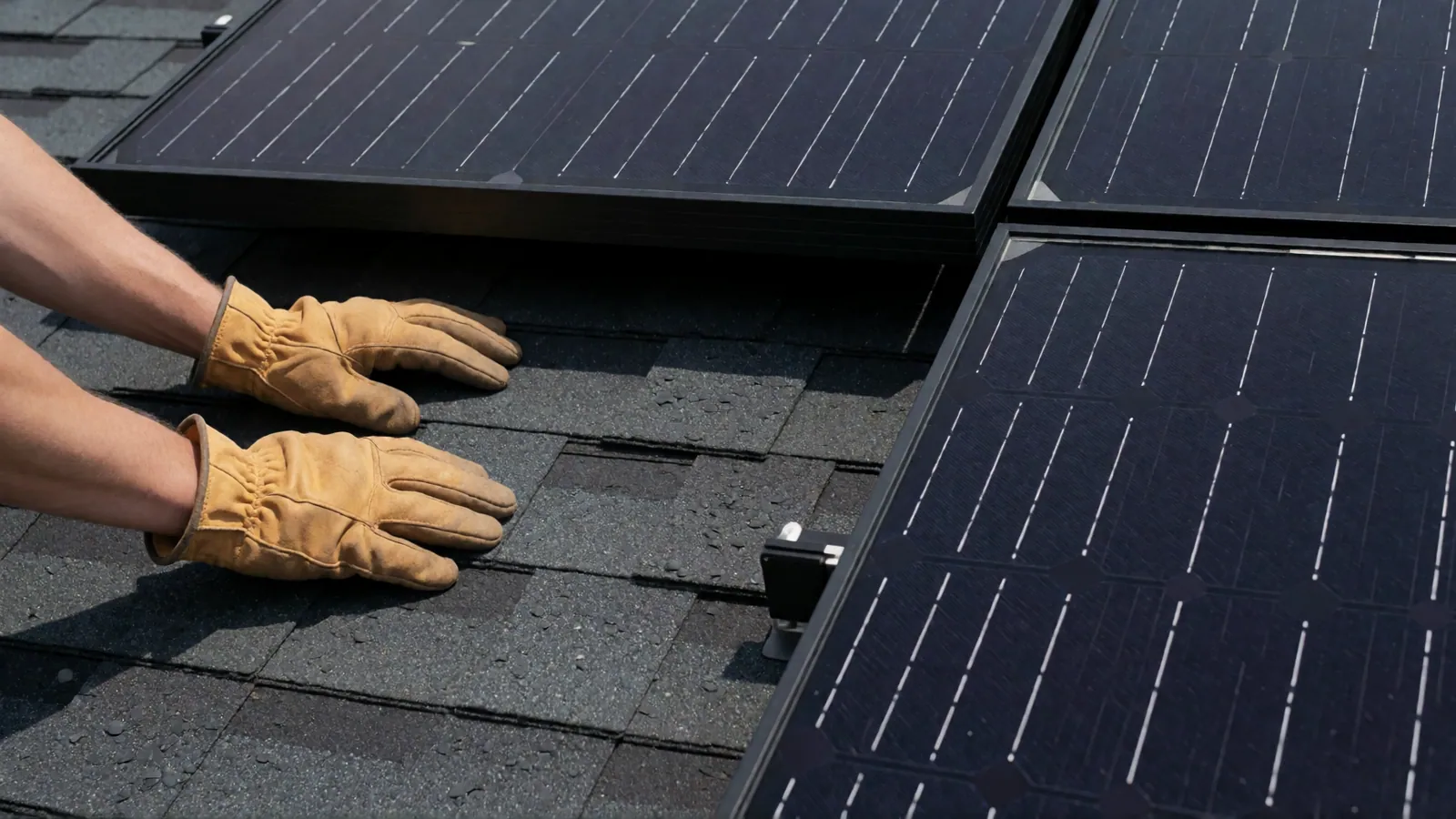
Close on a shingle roof between rows of black solar panels: a pair of hands in tan leather work gloves, the forearms bare, pressed flat on the dark shingles beside a rail mount.

How it works

The last walk on the roof, and what happens if something is wrong

The roof is walked with the crew lead before the crew leaves, against the same layout as in the morning, and anything wrong is said while everybody can see it.

  • The roof walked at the end
  • The contract is the promise

AI-generated illustration. Not a real person, home or business.

The walk on the roof at the end

Look at the roof with the crew lead before they leave.

That walk is read against the one at the start. The crew lead walks the roof with you against the layout: where the panels go, where the clear paths stay, where the wiring comes down the back wall. So the end is checked against the same drawing, and anything that was there that morning is not a mystery in the evening.

What to look at

  • The clear paths

    The walkway and the landings as clear as the layout drew them: no offcut, no box, no coil of wire left in them.

  • The roof itself

    On a flat roof, the pads square under the frames and no tear or scuff in the covering. On a sloped roof, each flashing tucked under the course of shingles above it, so the water runs over it rather than behind it.

  • The wiring

    The conduit straight down the back wall, fixed along its length and sealed where it goes into the house.

  • By the meter

    Keep the warning labels and the shut-off clear: they are for the fire department.

  • Inside

    The basement as you left it, the electrical panel's cover back on, and nothing marked on the stairs up to the bulkhead.

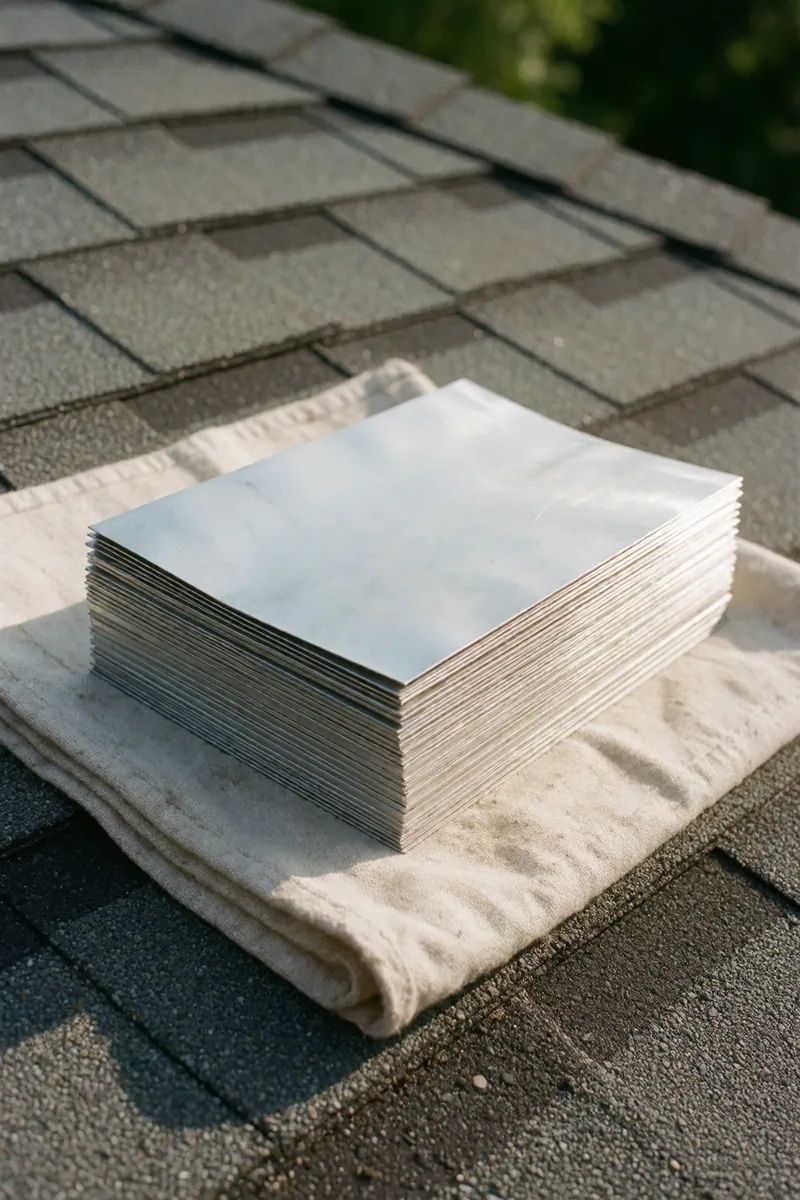
A neat stack of plain aluminum flashing plates on a folded canvas cloth on gray shingles.AI-generated illustration. Not a real home or business.

Saoirse Lindgren-Oyelaran

Roof attachments and flashing

Fixes the attachments to the rafters and seals every one of them.

Saoirse finds the rafter before she drills, every time.

Saoirse seals each attachment under a metal flashing before the rail goes on.

The picture is a still of the tools, not a portrait.

If something is damaged

If the crew damages something in your home or on the roof, tell the crew lead the same day; the contract says how it is put right. This demonstration company has no insurance to call on, which is one more reason a real installer names its insurer in the contract.

Take a picture of it before anything is moved, with the time on it, and show it to the crew lead before the crew leaves. A scrape found that evening is a fact both of you saw; one found a week later is an argument.

If water comes in after a storm

Note where it shows, on which ceiling and how far from the outside wall, and when it rained. Tell the office while it is still dripping, with pictures, and keep a bucket under it rather than going up yourself.

A drip under a sloped roof often shows some way from where the water got in, because it runs along a rafter first. So a stain is not always below the place the roof was drilled, and the contract's line on who is responsible for the roof where it is fixed is the one to read closely before you sign.

After the survey you get a written contract: the system's size, the make and model of the panels and the inverters, the layout, the price itemized, the dates we expect to start and finish, the payment stages, what the system is expected to make with the losses worked out, the production guarantee, the makers' warranties, and who is responsible for the roof where it is fixed. New York names solar energy systems in its home improvement law, so a job over five hundred dollars needs one in writing, signed by both of us, with a copy for you before any work is done.

If an inspector asks for a change

An independent inspector and the Department of Buildings' electrical inspector check the work, usually in the weeks after.

The job does not reach the utility until the inspections are passed, so anything an inspector asks for is put right and looked at again first.

Promises, and where they are written

In the contract, and nowhere else.

We promise what is in writing: the system, its layout, the price, the dates and what the contract says it will make. We don't offer a warranty of our own, a lifetime anything or a guarantee of satisfaction. The panels and the inverters carry their makers' warranties.

A real contract should name three separate promises in writing: the panel and inverter makers' warranties, written by the makers; the installer's own workmanship warranty; and what happens if the roof leaks where it was drilled. New York also requires a production guarantee in every purchase contract. In New York City a contractor who advertises a guarantee must put its terms in the ad and in the contract, and may not offer a lifetime one.

A change once the job is under way

Another row of panels, or a vent that turned out to be somewhere else.

After the three days, a contract can still be changed or ended by agreement; a change is written down and signed as a change order before the work it changes is done.

Size your roof

Try the roof sizing planner: panels, kilowatts and the roof they take at the published rate, in about three minutes. Sending it to us books nothing.