$5.20 a watt, no sales tax
Solar on a flat row-house roof
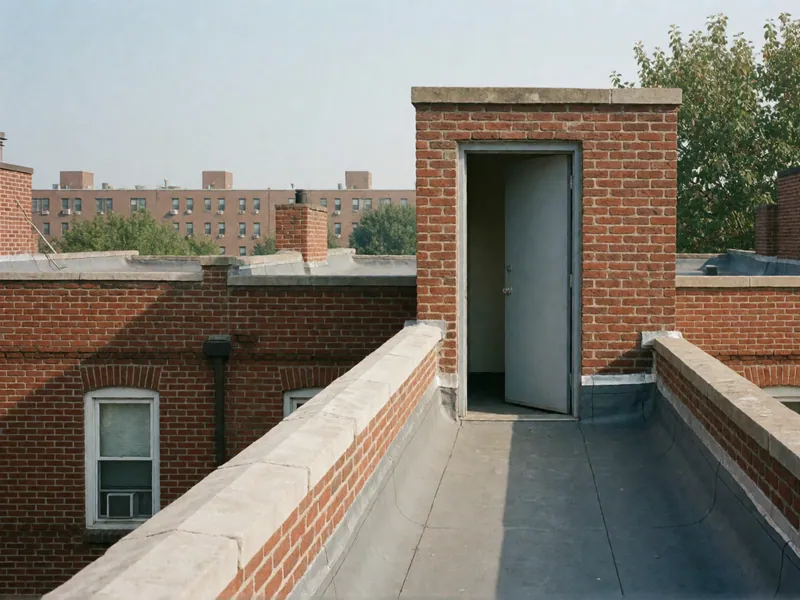
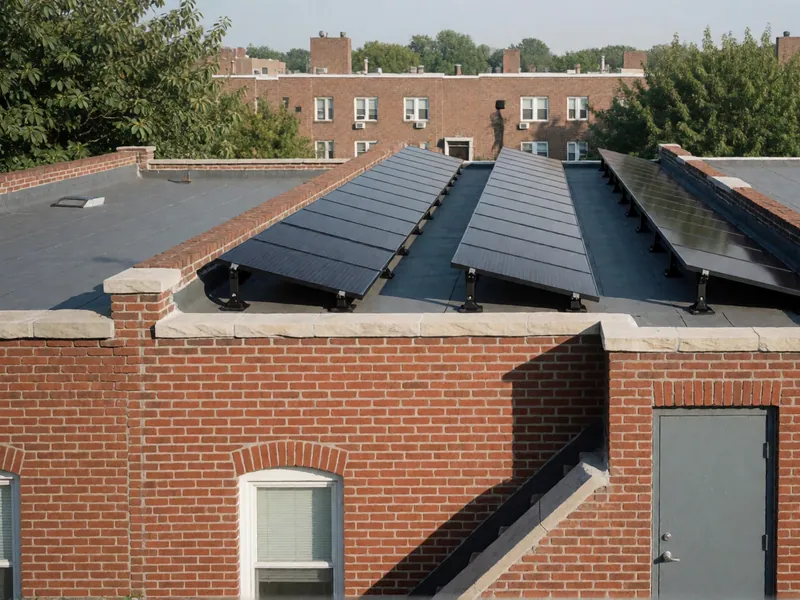
Low tilted frames on the flat roofs of Woodside's brick row houses, set out around the bulkhead, the hatch and the fire code's clear walkway.
Every job starts with a site survey.
37-32 61st Street, Woodside, NY 11377
Survey and paperwork
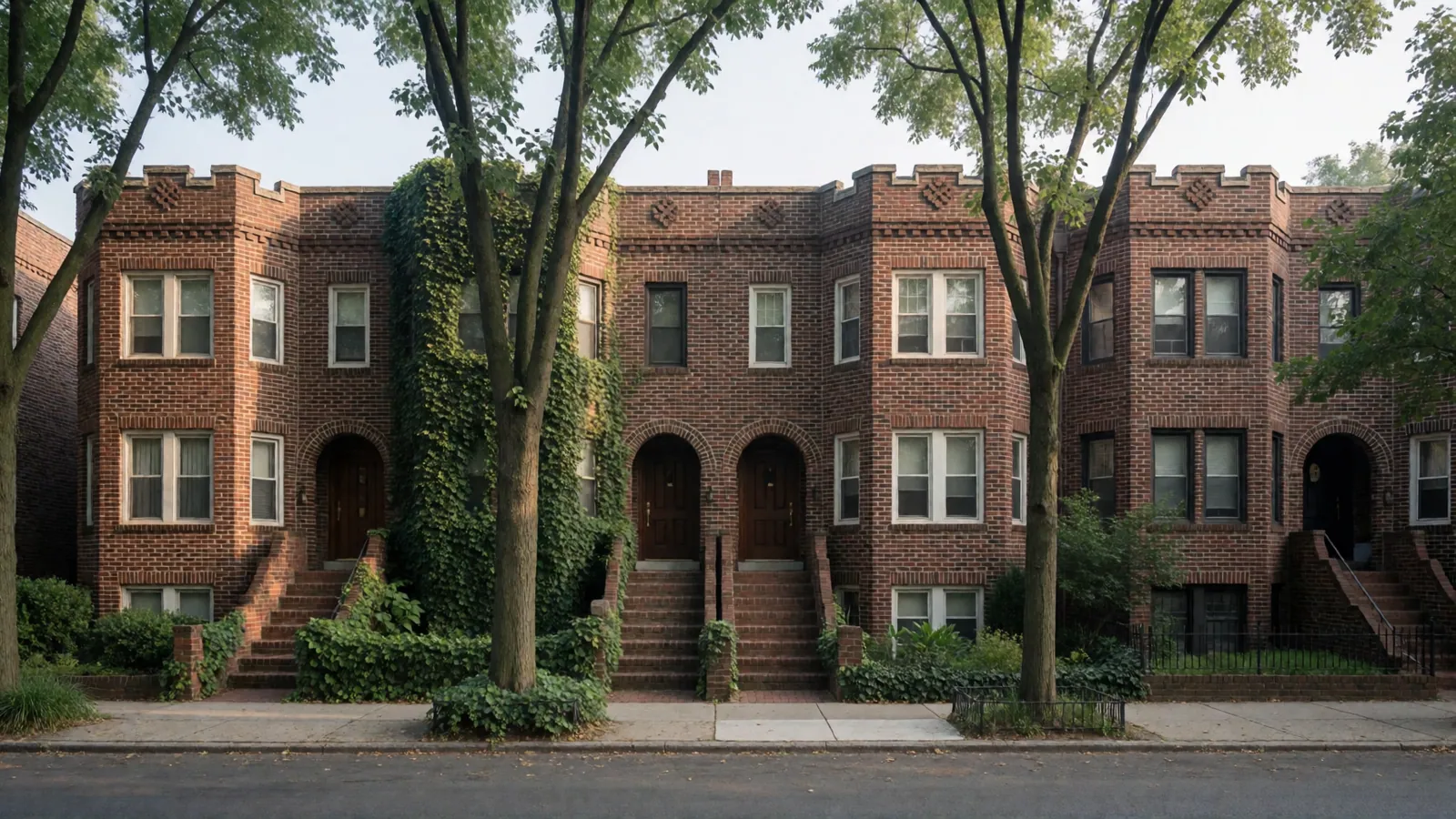
Sunnyside Gardens, Jackson Heights, Hunters Point, Ridgewood: the commission's permit first, all-black panels kept out of sight from the street. Seen first.
AI-generated illustration. Not a real home or business.
Solar on a landmark or in a historic district needs a permit from the Landmarks Preservation Commission before the Buildings filing. Panels usually have to be all black and nearly invisible from the street, and the review adds weeks. We don't plan these online; we see them first.
In a historic district the Landmarks Preservation Commission looks at what can be seen of a house as well as at what is done to it, and panels on a roof are among the things it looks at. The Buildings filing waits for its permit.
That shapes the system. On a flat roof the frames are kept lower and further back from the front than on a house outside a district, so that the parapet hides them from the street. On a sloped roof the panels lie close to it. The panels are black, in black frames, and the wiring comes down the back of the house.
A canopy, which stands higher, is much harder to keep out of sight, and the old roofing itself may be what the rules protect.
Slate, clay tile and wood shakes crack under foot and under racking, and on an older house they are often the very roofing the landmarks rules protect. We don't plan panels on them.
The planner asks, and its help line names some of them: Queens has historic districts in Sunnyside Gardens, Jackson Heights, Hunters Point and parts of Ridgewood, among others.
Answer yes and the planner stops there, because these houses are seen first. Answer that you are not sure and it gives a range, with the check made before anyone comes to the roof:
You weren't sure whether the house is in a historic district. The office looks it up on the Landmarks Preservation Commission's map before the survey; if it is, the commission's permit comes first.
From a signed contract to a system the utility lets you switch on usually takes two to four months in New York City: the drawings and the permits, the install itself in a day or two, the inspections, and the utility's own review. A landmark review or a fire department variance adds weeks.
The commission's review sits at the front of the paperwork, so its weeks come before the Buildings filing's, not beside them.
$5.20 a watt, no sales tax
Low tilted frames on the flat roofs of Woodside's brick row houses, set out around the bulkhead, the hatch and the fire code's clear walkway.
$4.60 a watt, no sales tax
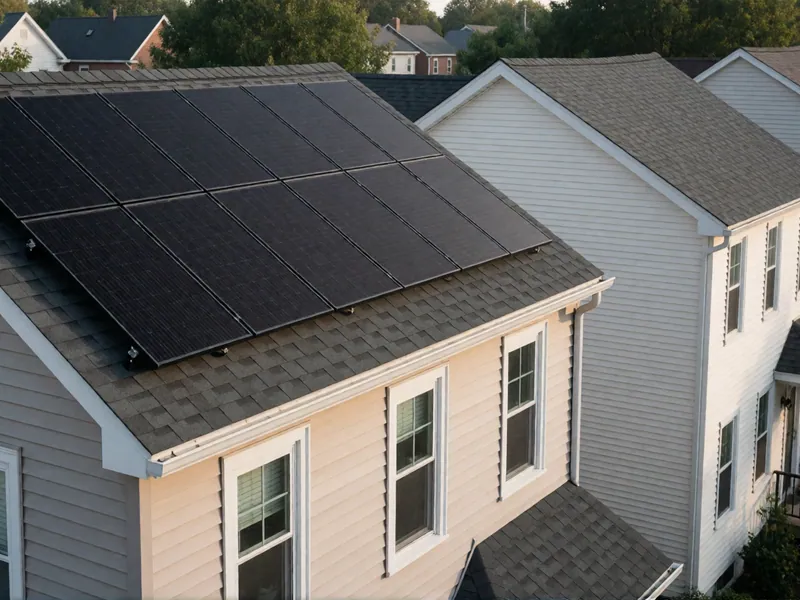
Rails fixed into the rafters of a frame house's shingle roof, every attachment sealed under a metal flashing, a clear strip kept at the ridge.
Inside the price per watt
The Buildings filings, the electrical permit, the fire code's paths, a landmarks permit where one applies and the utility's application, in order.
Give the office the address. If you are not sure, it is looked up on the commission's map before anything else is planned.