Rates
One published price per watt for each way of mounting
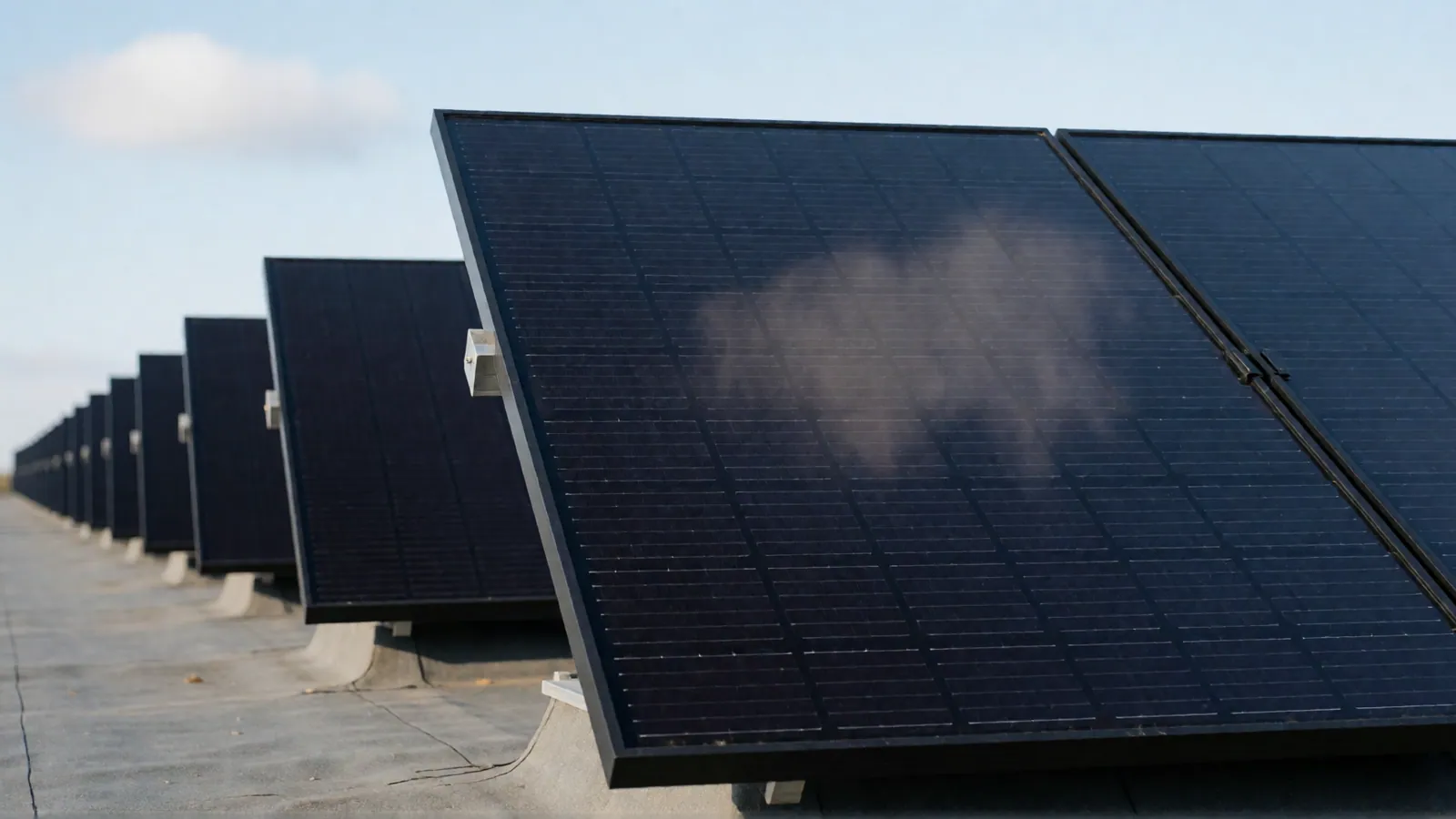
Rails on a sloped roof, low frames on a flat one, or a canopy over it: each has its own rate per watt, the same for every customer on every day, and there is no sales tax.
AI-generated illustration. Not a real home or business.
Rates
The rate per watt
A solar system is priced by the watt because the watts are what changes from one house to the next: how many panels the roof holds once its paths are kept, how many the household's use calls for, and which of the two is smaller. The rate for the mount stays where it is.
| The roof | The mount | The rate per watt |
|---|---|---|
| A flat roof | Low tilted frames on the roof itself | $5.20 |
| A flat roof | A raised canopy over the roof, high enough to walk under | $6.40 |
| A sloped roof | Rails fixed to the roof | $4.60 |
The three rates follow what goes up on the roof beside the panels. Rails on a sloped roof need the least, because the roof's own pitch tilts the panels toward the sky. Frames on a flat roof add the tilt, the pads under them and the space between the rows. A canopy adds posts, beams and structural drawings of its own, and in return keeps the walkway clear beneath the panels instead of beside them.
The smallest system, and panels off for a new roof
The smallest system planned is seven panels, about 3.1 kW: below that the permits, the drawings and the inspections are the same work for very little roof.
Taking panels off for a new roof and putting them back is $300 a panel, seen first, plus any sales tax New York charges on that work, which the written price shows. The roofing itself is your roofer's.
Panels that have been up for some years are looked at before they come down, because a clamp, a connector or a run of wire that has had its time is better replaced on the ground than found on the roof afterwards. That is why the price for each panel is always said with the words seen first beside it.
In writing
How it is priced, before anything is sent
These are the headings the planner prints under every sizing range, with every sentence it prints under them.
The rate per watt
The price is per watt of panels, by how they are mounted: $4.60 a watt on rails on a sloped roof, $5.20 a watt on low tilted frames on a flat roof, and $6.40 a watt under a raised canopy over a flat roof. It is the same for every customer on every day. A system's price is its watts times the rate, and each panel the company fits is 440 watts. The worked examples on this page show what that comes to for five real kinds of house.
What the price covers
The price per watt covers the survey, the layout and the drawings, the panels, the inverters, the racking or the canopy, the wiring, the permits and the utility application, the install, the inspections and the monitoring set-up. It does not cover roof work, a new electrical service or a main panel upgrade, which are seen at the survey and priced in writing if they are needed.
Sales tax
There is no sales tax on a home solar system in New York City: the equipment and its installation are exempt from State and City sales tax. A real installer asks you to sign New York's exemption form. Roof work and an electrical panel upgrade are not part of that exemption.
Paying
Nothing is paid on this website, and there is no deposit. You pay in stages, after each stage is done, from the contract: when the permits are issued, when the system is on the roof, and when the utility lets it run. Check or bank transfer; we don't take cash or cards.
The contract and the three days
After the survey you get a written contract: the system's size, the make and model of the panels and the inverters, the layout, the price itemized, the dates we expect to start and finish, the payment stages, what the system is expected to make with the losses worked out, the production guarantee, the makers' warranties, and who is responsible for the roof where it is fixed. New York names solar energy systems in its home improvement law, so a job over five hundred dollars needs one in writing, signed by both of us, with a copy for you before any work is done. You can cancel the contract until midnight of the third business day after the day you sign it, wherever you sign it, owing nothing: tell us in writing before that midnight, by letter to the office or by e-mail; a letter counts on the day it is mailed. Nothing is ordered, nothing is filed in your name and no work is done until then.
One price for everybody
No weekend price, no end-of-season price and no price for signing today: one published rate per watt for each mount, on every day.
There is no sale price, no percentage off, no referral bonus and no price match here, because a price cut from a price nobody ever paid is not allowed in New York City advertising, and this company has no earlier price to cut from. Every customer pays the published rate.
Buying the system outright
We describe only buying a system outright. Leases, power purchase agreements and solar loans carry their own disclosures and long-term obligations, and New York's Attorney General has sued a company whose lenders' fees were hidden inside the system price. If anyone offers you one, read the State's disclosure form and the loan's total cost before you sign.
Worked examples
Five roofs, worked through
Each is the planner's answer to one set of questions, at the rates above: a sizing range, labeled as one. Your own answers give your own range.
A worked example: a sizing range
A row house with low frames A 1930s brick row house in Woodside
The thirteen answers behind it
- Where is the house?
- Woodside or a neighborhood next to it
- Do you own the house?
- Yes, I own it, alone or with someone
- What kind of house is it?
- An attached or semi-detached row house, one home
- When was it built?
- Before 1987
- Is the house a landmark, or in a historic district?
- No
- What is the roof like?
- Flat or nearly flat, behind a low wall, with a rolled roof: rubber, modified bitumen, a white membrane or tar
- How old is the roof's covering?
- Ten to fifteen years old
- How much shade falls on the roof in the middle of the day?
- Open sky most of the day
- How big is the roof?
- A row house about twenty feet wide and forty deep
- On a flat roof, how would you like the panels mounted?
- Low tilted frames on the roof itself
- What is in the electrical box in the basement?
- A panel of circuit breakers
- How would you like to give your electricity use?
- In kilowatt-hours (kWh), from the usage line
- About how many kilowatt-hours a month?
- 500 to 700 kWh a month
- Panels440 watts each11 to 16 panels
- System sizethe panels' watts added up4.8 kW to 7.0 kW
- Roof they take28 square feet a panel on this mount308 to 448 square feet
- Mounted ona flat roofLow tilted frames on the roof itself
- The ratethe same for every customer on every day$5.20 a watt
- The range, before any incentivea system's price is its watts times the rate, and each panel the company fits is 440 watts$25,168.00 to $36,608.00
- No sales tax: a home solar system is exempt in New York City.
- The use it is sized fromin kilowatt-hours (kWh), from the usage line500 to 700 kWh a month
- For a house built before 1987, or one whose age nobody knows, the owner has an asbestos investigation made before the Buildings filing, because old roofing and the materials around it can contain asbestos. It is a step on the way, not a reason to stop.
A worked example: a sizing range
A row house under a canopy A 1920s brick row house in Maspeth
The thirteen answers behind it
- Where is the house?
- Woodside or a neighborhood next to it
- Do you own the house?
- Yes, I own it, alone or with someone
- What kind of house is it?
- An attached or semi-detached row house, one home
- When was it built?
- Before 1987
- Is the house a landmark, or in a historic district?
- No
- What is the roof like?
- Flat or nearly flat, behind a low wall, with a rolled roof: rubber, modified bitumen, a white membrane or tar
- How old is the roof's covering?
- Under ten years old
- How much shade falls on the roof in the middle of the day?
- Open sky most of the day
- How big is the roof?
- A row house about twenty feet wide and forty deep
- On a flat roof, how would you like the panels mounted?
- A raised canopy over the roof, high enough to walk under
- What is in the electrical box in the basement?
- A panel of circuit breakers
- How would you like to give your electricity use?
- In kilowatt-hours (kWh), from the usage line
- About how many kilowatt-hours a month?
- 900 to 1,200 kWh a month
- Panels440 watts each20 to 27 panels
- System sizethe panels' watts added up8.8 kW to 11.9 kW
- Roof they take21 square feet a panel on this mount420 to 567 square feet
- Mounted ona flat roofA raised canopy over the roof, high enough to walk under
- The ratethe same for every customer on every day$6.40 a watt
- The range, before any incentivea system's price is its watts times the rate, and each panel the company fits is 440 watts$56,320.00 to $76,032.00
- No sales tax: a home solar system is exempt in New York City.
- The use it is sized fromin kilowatt-hours (kWh), from the usage line900 to 1,200 kWh a month
- For a house built before 1987, or one whose age nobody knows, the owner has an asbestos investigation made before the Buildings filing, because old roofing and the materials around it can contain asbestos. It is a step on the way, not a reason to stop.
A worked example: a sizing range
A frame house, roof facing south A 1950s detached house in Bayside
The thirteen answers behind it
- Where is the house?
- Elsewhere in Queens
- Do you own the house?
- Yes, I own it, alone or with someone
- What kind of house is it?
- A detached house, one home
- When was it built?
- Before 1987
- Is the house a landmark, or in a historic district?
- No
- What is the roof like?
- Sloped, with asphalt shingles
- How old is the roof's covering?
- More than fifteen years old
- Which way does the sloped roof face?
- South, southeast or southwest
- How much shade falls on the roof in the middle of the day?
- Open sky most of the day
- How big is the roof?
- A detached or two-family house of the usual Queens size
- What is in the electrical box in the basement?
- A panel of circuit breakers
- How would you like to give your electricity use?
- In kilowatt-hours (kWh), from the usage line
- About how many kilowatt-hours a month?
- 700 to 900 kWh a month
- Panels440 watts each13 to 16 panels
- System sizethe panels' watts added up5.7 kW to 7.0 kW
- Roof they take21 square feet a panel on this mount273 to 336 square feet
- Mounted ona sloped roofRails fixed to the roof
- The ratethe same for every customer on every day$4.60 a watt
- The range, before any incentivea system's price is its watts times the rate, and each panel the company fits is 440 watts$26,312.00 to $32,384.00
- No sales tax: a home solar system is exempt in New York City.
- The use it is sized fromin kilowatt-hours (kWh), from the usage line700 to 900 kWh a month
- Your use would call for more panels than the roof holds once its clear paths are kept, so the roof sets the range.
- The roof is looked at first. Panels stay up for decades, so a roof covering near the end of its life is replaced before they go on, not after. Taking panels off and putting them back later costs money, and in New York City replacing a whole roof deck brings its own requirement for solar or a green roof. We don't do roofing: a roofer goes first, and the survey says whether one is needed.
- For a house built before 1987, or one whose age nobody knows, the owner has an asbestos investigation made before the Buildings filing, because old roofing and the materials around it can contain asbestos. It is a step on the way, not a reason to stop.
A worked example: a sizing range
A two-family house, roof facing east and west A 1990s two-family house in Astoria
The thirteen answers behind it
- Where is the house?
- Woodside or a neighborhood next to it
- Do you own the house?
- Yes, I own it, alone or with someone
- What kind of house is it?
- A two-family house
- When was it built?
- 1987 or later
- Is the house a landmark, or in a historic district?
- No
- What is the roof like?
- Sloped, with asphalt shingles
- How old is the roof's covering?
- Ten to fifteen years old
- Which way does the sloped roof face?
- East and west, with the ridge running north to south
- How much shade falls on the roof in the middle of the day?
- A tree or a taller building shades part of it for part of the day
- How big is the roof?
- A detached or two-family house of the usual Queens size
- What is in the electrical box in the basement?
- A panel of circuit breakers
- How would you like to give your electricity use?
- In dollars, from the amount due
- About how much is the bill a month?
- $200 to $250 a month
- Panels440 watts each17 to 22 panels
- System sizethe panels' watts added up7.5 kW to 9.7 kW
- Roof they take21 square feet a panel on this mount357 to 462 square feet
- Mounted ona sloped roofRails fixed to the roof
- The ratethe same for every customer on every day$4.60 a watt
- The range, before any incentivea system's price is its watts times the rate, and each panel the company fits is 440 watts$34,408.00 to $44,528.00
- No sales tax: a home solar system is exempt in New York City.
- The use it is sized fromin dollars, from the amount due572 to 734 kWh a month
- Your bill shows the kilowatt-hours used in the month. If you give a dollar amount instead, the planner takes off Con Edison's basic monthly charge, $22.60, and reads the rest at about thirty-one cents a kilowatt-hour, Con Edison's 2026 residential price for supply and delivery together. Supply prices change every month, so use a typical month, or a year's bills divided by twelve.
- You said some shade falls on the roof, so the planner sized the panels for it. The survey measures where it falls.
A worked example: a sizing range
A small household's use A brick row house in Elmhurst
The thirteen answers behind it
- Where is the house?
- Woodside or a neighborhood next to it
- Do you own the house?
- Yes, I own it, alone or with someone
- What kind of house is it?
- An attached or semi-detached row house, one home
- When was it built?
- I don't know
- Is the house a landmark, or in a historic district?
- No
- What is the roof like?
- Flat or nearly flat, behind a low wall, with a rolled roof: rubber, modified bitumen, a white membrane or tar
- How old is the roof's covering?
- Ten to fifteen years old
- How much shade falls on the roof in the middle of the day?
- Open sky most of the day
- How big is the roof?
- A row house about twenty feet wide and forty deep
- On a flat roof, how would you like the panels mounted?
- Low tilted frames on the roof itself
- What is in the electrical box in the basement?
- A fuse box
- How would you like to give your electricity use?
- In kilowatt-hours (kWh), from the usage line
- About how many kilowatt-hours a month?
- Under 300 kWh a month
- Panels440 watts each7 panels
- System sizethe panels' watts added up3.1 kW
- Roof they take28 square feet a panel on this mount196 square feet
- Mounted ona flat roofLow tilted frames on the roof itself
- The ratethe same for every customer on every day$5.20 a watt
- The range, before any incentivea system's price is its watts times the rate, and each panel the company fits is 440 watts$16,016.00
- No sales tax: a home solar system is exempt in New York City.
- The use it is sized fromin kilowatt-hours (kWh), from the usage line150 to 300 kWh a month
- The smallest system planned is seven panels, about 3.1 kW: below that the permits, the drawings and the inspections are the same work for very little roof.
- For a house built before 1987, or one whose age nobody knows, the owner has an asbestos investigation made before the Buildings filing, because old roofing and the materials around it can contain asbestos. It is a step on the way, not a reason to stop.
- An old fuse box, or an electrical service nobody has looked at, is checked at the survey before the system is designed: some houses need a new service or a main panel first, which a licensed master electrician does and is priced in writing.
A sizing range is not an estimate, a quote or a proposal, and nothing on this site is an offer. It is the number of panels your answers suggest, the roof they would take and their price at the published rate per watt, before any incentive. It says nothing about what a system would make or save. The system is designed after a survey of your roof and your electrical panel, priced in a written contract, and you can cancel that contract until midnight of the third business day after you sign it.
Size your roof
Try the roof sizing planner: panels, kilowatts and the roof they take at the published rate, in about three minutes. Sending it to us books nothing.