The journal
Should the roof be replaced before solar?
Why a covering near the end of its life comes off before the panels go on, what taking panels off later involves, and the City's rule for a whole new roof deck.
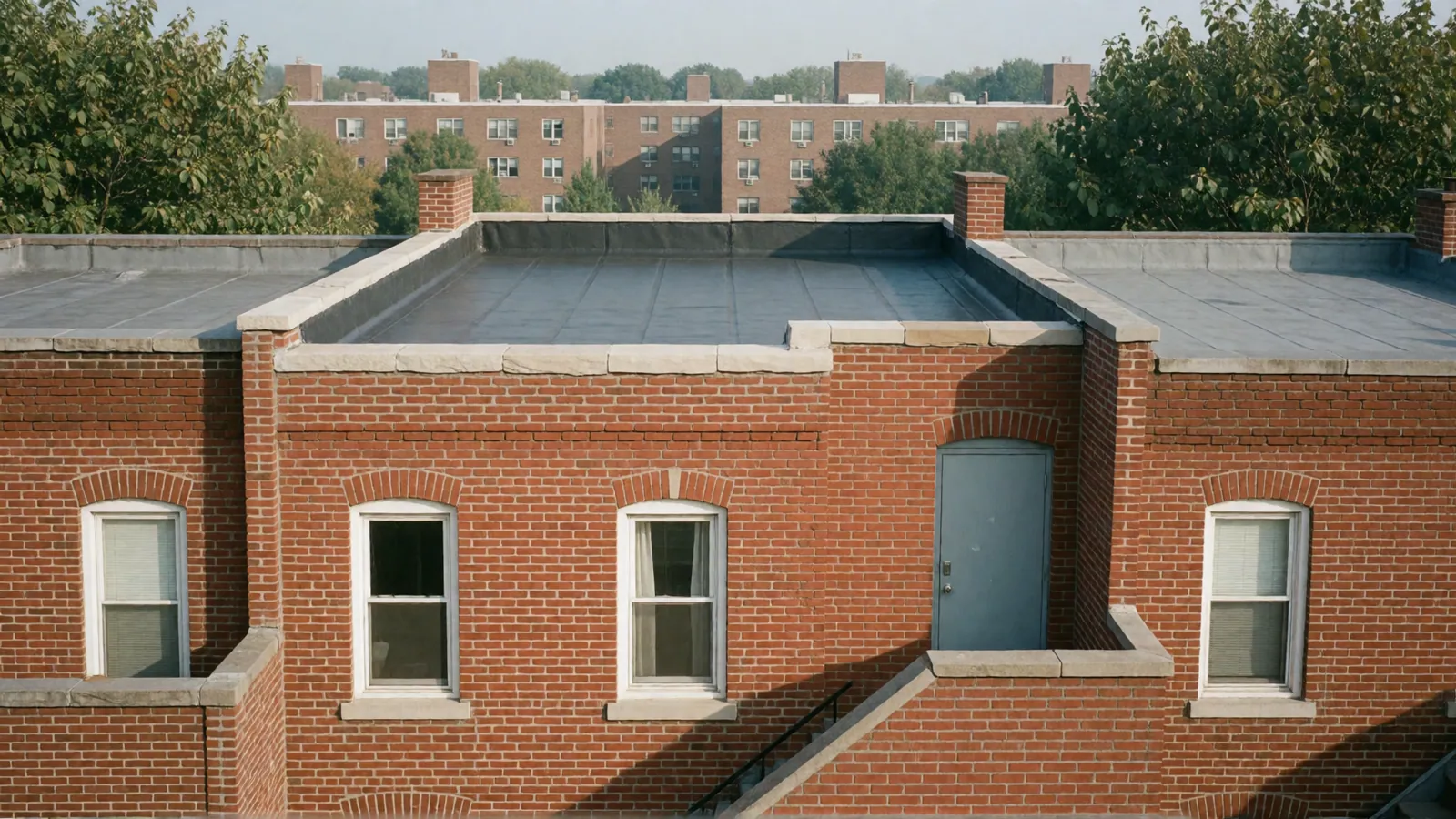
AI-generated illustration. Not a real home or business.
Decades on the roof
The question is one of order, and this company's answer to it is the same on every roof:
Panels stay up for decades, so a roof covering near the end of its life is replaced before they go on, not after. Taking panels off and putting them back later costs money, and in New York City replacing a whole roof deck brings its own requirement for solar or a green roof. We don't do roofing: a roofer goes first, and the survey says whether one is needed.
The trouble with doing it the other way round is not the roof work itself, which a roofer does every week. It is everything sitting on top of the roof: the rails or the frames, the wiring and the attachments, all of which have to come off before the roofer can start and go back on after, rewired and inspected again.
On a flat roof the frames sit on pads, so a small patch can be made between them. Replacing the covering cannot: the roofer needs the whole surface clear, the pads included, and the frames have to go somewhere while the work is done.
How old is old
The planner asks "How old is the roof's covering?", and adds beneath it: "When it was last replaced, not when the house was built." Each answer does one of two things:
Under ten years old
The planner sizes the system as it is. The survey looks at the covering anyway.
Ten to fifteen years old
The planner sizes the system as it is. The survey looks at the covering anyway.
More than fifteen years old
The planner still sizes the system, and adds a line to the range: the roof is looked at first.
I don't know
The planner still sizes the system, and adds a line to the range: the roof is looked at first.
These bands are this company's own line for when to look first, and the survey decides. A covering of the same age can be sound on one roof and tired on the next, depending on how it was laid, how the water runs off it and how much sun it takes.
What the survey looks at
On a flat roof the survey looks for blisters, soft spots underfoot, open seams and water that stands after rain. On a sloped roof it looks for curled or cracked shingles, bare patches and the flashing round the chimney and the vents. Under the roof, wherever it can be reached, it looks for the stains an old leak leaves behind.
And on some roofs the covering decides the matter on its own:
Slate, clay tile and wood shakes crack under foot and under racking, and on an older house they are often the very roofing the landmarks rules protect. We don't plan panels on them.
An older house has one more step attached to its roofing, whichever way the order falls. It is part of the paperwork, and it is the owner's:
For a house built before 1987, or one whose age nobody knows, the owner has an asbestos investigation made before the Buildings filing, because old roofing and the materials around it can contain asbestos. It is a step on the way, not a reason to stop.
When a roofer does go first, the survey looks at the new roof again before the layout is finished, because the layout is drawn for the roof the panels will actually sit on, not the one that was there at the first visit.
Panels off, and back on
If the panels are already up when the roof needs doing, they come off before the roofer starts and go back when the roofer has finished:
Taking panels off for a new roof and putting them back is $300 a panel, seen first, plus any sales tax New York charges on that work, which the written price shows. The roofing itself is your roofer's.
On a sloped roof every attachment that comes out leaves a hole in the old covering, and every one that goes back in is a new hole in the new one, which has to be sealed as carefully as the first time. Saoirse Lindgren-Oyelaran fixes the attachments to the rafters and seals every one of them. She finds the rafter before she drills, every time. She seals each attachment under a metal flashing before the rail goes on.
A roofer first, and the money
When the roofer goes first, the roofer has a contract of its own, and New York treats roofing differently in one respect that matters at the kitchen table:
If a job includes roofing, a roofing contractor may not ask for a deposit at all.
- N.Y. General Business Law § 771-b(5) (opens the source in a new tab) A roofing contractor may not require an owner to provide a deposit for the work and materials.
This company does no roofing. It looks at the roof first, says whether a roofer should come before the panels, and plans around the roofer's work:
- Not offered: roofing: a new roof, a repair or a coating. A roofer goes first.
Size your roof
Try the roof sizing planner: panels, kilowatts and the roof they take at the published rate, in about three minutes. Sending it to us books nothing.